
Filosofía en Cádiz
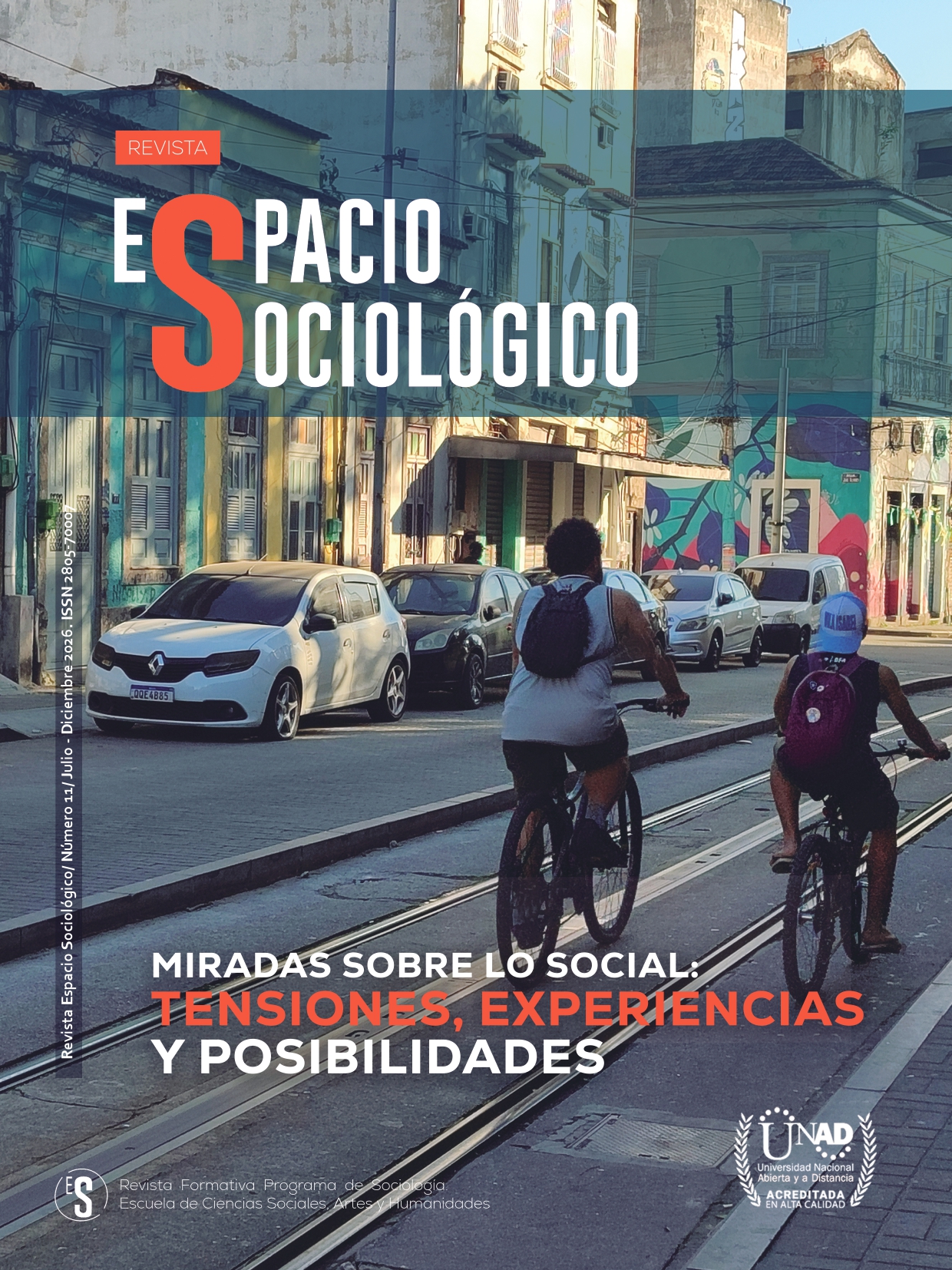
Acaba de publicarse en la revista Espacio Sociológico, nº 11 (julio-diciembre 226), pp. 276-311, de la Universidad Nacional Abierta y a Distancia de Colombia (UNAD), un artículo del Dr. Juan Manuel Hernández Aguilar, titulado "Cómo estudiar a Foucault desde Francisco Vázquez García: Una guía para aplicar, no solo citar". Juan Manuel Hernández Aguilar es Doctor en Filosofía por la Universidad del Valle (Colombia), magíster y profesional en Filosofía por la misma institución. Actualmente es docente de Filosofía en la Universidad Nacional Abierta y a Distancia (UNAD), donde también lidera un grupo de investigación. El artículo se puede descargar on line pinchando en este enlace. Se reproduce debajo el resumen del artículo en inglés:
Studying Foucault through Vázquez García entails relinquishing the deeply academic habit of amassing citations as if they were scholarly talismans. The task here is not to invoke the French philosopher like someone hanging a scapular to ward off ignorance, but something more demanding: to use his tools to read the present with care, like a craftsperson who values a hammer only insofar as it strikes where it should. The genealogist’s central gesture, Vázquez reminds us, does not consist in tracing glorious origins. Rather, it entails passing through tensions, frictions, and minor resistances that shape power relations. If Foucault could choose a temple, he would opt for a dusty archive over a solemn monument. This is why genealogy surprises: it looks where others dismiss, in what is too ordinary or too uncomfortable to appear in a textbook.Archaeogenealogy, for its part, seems to operate with a quiet irony. It is a historical method that does not begin in the past but in the present, a shifting terrain where we assume everything is clear until someone asks the right question. Its presentism is more a provocation than a position. Do we really know who we are, or are we merely repeating what our institutions, our categories, and our well-intentioned consciences allow us to think? Taking this approach means accepting that identities, discourses, and social practices are not compact structures but contested terrains. Subjectivities are not inherited like an old house. They are built, stretched, fractured, and sometimes set ablaze. Time does not advance like an arrow cutting through the air. It behaves more like a river that eddies and branches, dragging along its own banks. Vázquez illustrates this with uncomfortable examples, as the method demands: the anticlerical campaign against ecclesiastical pederasty, the regulation of sex work, the rights of intersex people. In such cases the most intriguing dimension of power appears. It does not only forbid; it also produces. It creates subjects, regulates bodies, invents normalities, inspires resistances that in turn reshape power itself. In this way the simple explanation that imagines power as a solid block unravels. The Foucauldian analysis reveals something more unsettling: power is less a building than a swarm. The text concludes by claiming a critical function for these methodologies. It is a matter of understanding the discontinuities of the present, its subterranean ties, and the real possibilities for transformation.